TPR vs. Short Plush vs. Oxford Fabric for Custom Plush Pet Toys
Choosing an outer material for a custom plush pet toy is a durability decision before it is a design decision. Food-grade TPR, short plush, and Oxford fabric are the three outer materials most often quoted in OEM plush pet toy programmes, and each one solves a different problem. TPR provides a soft, rubber-like chew and teething surface. Short plush provides softness, print fidelity, and the classic plush hand-feel. Oxford fabric provides the woven structure that resists tearing and surface abrasion.
Which one is right depends on three variables a buyer can define before a single sample is cut: the dog's chew resistance level (light, moderate, or aggressive), the product's size band (from 10–15 cm up to 30–50 cm), and the dog's weight class (under 5 kg, 5–15 kg, or 15–30 kg). Define those three and the material choice narrows quickly. Skip them and even a fully compliant, well-sewn toy can be opened up within weeks.
This comparison looks at how each material behaves, how to match material to chew level, size and dog weight, where each combination makes commercial sense, and which compliance requirements — EN71 in the EU, ASTM F963-23 and CPSIA in the US, and GB/T 43839-2024 in China — the finished product has to satisfy.
The Real Trade-Off: Softness, Chew Resistance, and Cost Pull in Opposite Directions
Buyers rarely specify "a material". They specify a bundle of performance claims: squeaky, tear resistant, heavy duty, washable, teething-safe, interactive. The difficulty is that those claims pull the specification in different directions.
Softness and abrasion resistance trade against each other. A piled knit such as short plush creates its soft surface by raising fibre ends above the base structure — and those raised fibre ends are the first thing a dog's teeth grip. A woven fabric such as Oxford fabric earns its tear and abrasion resistance from tightly interlocking warp and weft yarns in a flat, dense weave; that structure holds up better under friction, but it does not feel like plush.
Chew resistance and unit cost trade against each other. A single-layer plush body uses one fabric layer and a standard stitch pattern. A reinforced body uses double-layer fabric plus reinforced stitching, which costs more per unit and takes longer to assemble. In exchange, it changes how long the toy survives: a basic plush construction — no reinforced structure, only basic fabric and stuffing — carries a documented lifespan of 1–3 months, while a reinforced plush construction using double-layer fabric and reinforced stitching is documented at 3–12 months, a 2 to 4 times lifespan increase over the basic tier.
The practical consequence is that the material question is the second question, not the first. The first question is what chew level, what size, and what dog weight the SKU is built for. Once those are defined, the material decision usually resolves itself — and it frequently resolves to a combination of materials rather than to a single one.
Industry Background: Why Material Specification Is Now a Purchasing Priority
Dog toys are the largest segment of the pet toy category, holding a 52.2% share in 2025, a position driven largely by the humanisation trend (Grand View Research). The global pet toy market was valued at approximately USD 10.6 billion in 2025 and is projected to reach USD 22.4 billion by 2033. Within the wider plush category, the global stuffed animals and plush toys market — which includes pet products — was valued at USD 13.68 billion in 2025.
Material selection sits inside that growth curve. In the United States, fabric is the largest material segment for dog toys, accounting for a 39.8% market share as of 2025 (Future Market Insights). At the same time, the interactive pet toys segment is expected to reach USD 3.7 billion by 2030, growing at a CAGR of 10.2% as owners prioritise mental stimulation — a segment that typically pairs a textile body with rubber-like functional parts such as TPR.
Regional demand shapes the specification as well. China's pet toy market was valued at approximately USD 516.1 million in 2023, with a projected CAGR of 9.7% through 2030. For brand owners and importers, the practical effect is that one material platform now has to satisfy three compliance regimes — EU, US and China — and several price tiers at the same time. That is why material specification has moved from a design detail to a purchasing decision with cost and compliance consequences attached.
The Three Outer Materials, and What Each One Actually Does
Food-Grade TPR
TPR — thermoplastic rubber — is a rubber-like polymer that can be moulded into shapes while remaining soft and flexible in use. On a plush pet toy it is normally a component rather than the whole body: a chew surface, a teething texture, a squeaker housing, or a grip element that is bonded or stitched onto a textile body.
Food-grade TPR is specified precisely because it is the part that goes into the dog's mouth. A brief that calls for food-grade TPR usually carries three claims alongside it — non-toxic, lead-free, and phthalate-free — and those claims only carry weight when they are tied to a test method. In the EU that means the chemical migration limits of EN71-3; in the US it means CPSIA limits together with the heavy-metal provisions of ASTM F963-23.
What it is good at: a soft but resilient chew surface, moulded texture that fabric cannot reproduce, and easy cleaning because there is no fibre pile to trap debris.
Where it has limits: TPR is a functional element, not a soft plush shell, so it does not deliver the cuddle hand-feel that drives plush purchase intent. It also adds an assembly step, because the TPR part must be joined to the textile body at a seam or bond line that becomes a stress point.
Typical role: teething toys, interactive toys with a chewable core, and moderate-chewer SKUs where the dog needs a defined place to bite.
Short Plush
Short plush is a short-pile knit fabric, most commonly polyester, in which the pile height is deliberately kept low. The result is a dense, smooth surface with a high-quality hand-feel and strong performance in printing, embroidery and colour reproduction.
What it is good at: softness and comfort, accurate print and embroidery detail, light weight, and the classic plush appearance that sells in retail and on e-commerce listing pages. It is the natural choice in the 10–15 cm band, where a squeaky toy's whole appeal is that it is soft, light and easy to carry.
Where it has limits: the pile itself is the weak point. Under concentrated chewing the fibre ends abrade and pull, and a piled knit generally offers less tear resistance than a woven fabric. Used as a single layer, short plush supports a short service life; used as a double-layer fabric with reinforced stitching, the same material is documented at a substantially longer lifespan.
Typical role: squeaky toys, teething-companion plush, washable plush, and small-format SKUs for light and moderate chewers.
Oxford Fabric
Oxford fabric is a woven textile — usually polyester or nylon — built from interlocking warp and weft yarns in a flat, dense weave. The weave, rather than the fibre, is what gives the material its mechanical character.
What it is good at: tear resistance and abrasion resistance, dimensional stability under load, and predictable behaviour when it is cut and sewn at scale. In heavy duty and tear resistant SKUs it is the material that keeps the toy's outline intact after repeated chewing cycles.
Where it has limits: softness, hand-feel and pile are all lower than short plush, so it changes the product's perceived character. It also does not remove the need for good seam engineering — a woven shell still fails at a weak seam before it fails in the middle of a panel, which is why reinforced stitching matters as much as the fabric itself.
Typical role: heavy duty and tear resistant toys, larger formats in the 30–50 cm band, aggressive-chewer SKUs, and structural panels on interactive toys.
Step-by-Step: Matching Material to Chew Level, Size, and Dog Weight
The sequence below turns three buyer inputs into a material and construction decision. It is a selection framework rather than a measured test result, and it should be confirmed against a physical sample before tooling.
Step 1 — Fix the chew resistance level
- Light chewers mouth, carry and occasionally nibble a toy. Surface damage stays shallow and seams are rarely the failure point.
- Moderate chewers work steadily on edges, corners and squeaker openings. Damage concentrates at seams and at any attached part.
- Aggressive chewers apply sustained pressure across the toy and target seams, stuffing and attached components. These SKUs need tear resistance and reinforced stitching as a baseline, not as an upgrade.
Step 2 — Fix the size band
- 10–15 cm: small squeaky and teething formats; short plush is usually the best fit.
- 15–30 cm: the middle band, where a reinforced construction starts to pay for itself.
- 30–50 cm: large formats, normally paired with Oxford fabric panels and reinforced stitching.
Step 3 — Fix the dog weight band
Weight does not equal chew intensity, but it does determine the scale of the toy and therefore the total seam length and stressed area.
- Under 5 kg: small-format squeaky and teething toys; short plush constructions are typically adequate.
- 5–15 kg: the widest commercial band; reinforced short plush or a mixed short plush and Oxford fabric construction.
- 15–30 kg: heavy duty formats, where a woven shell and reinforced seams are the safer specification.
Step 4 — Choose the construction tier
The construction tier is the variable with documented lifespan impact. A basic plush construction is documented at 1–3 months and requires frequent replacement. A reinforced plush construction — double-layer fabric plus reinforced stitching — is documented at 3–12 months, a 2 to 4 times lifespan increase, with lower breakage, low maintenance and a medium cost position.
Step 5 — Confirm the compliance path for the destination market
EU, US and China require different evidence, and the test route should be confirmed before tooling. A material change after testing means retesting, which is why material and compliance decisions belong in the same conversation.
Step 6 — Validate the stress points on a sample
Ask for the sample to be assessed specifically at the seams, the squeaker opening, and the joint between the TPR element and the textile body. These are the three places where a custom plush pet toy usually fails first, regardless of which outer material was chosen.
Use Cases: Where Each Material Combination Pays Off
The three materials are not direct competitors so much as different answers to different product briefs. The combinations below show how the trade-offs described above translate into finished SKUs.

- Squeaky custom plush pet toys (10–15 cm, under 5 kg): a short plush body with a squeaker. Softness and print detail are the selling points, and the light-chewer profile means a single-layer construction can be adequate.
- Teething custom plush pet toys (15–30 cm, 5–15 kg): food-grade TPR as the chew or teething element, joined to a short plush body. The TPR part gives the dog a defined biting surface while the plush part preserves the soft, toy-like character. The TPR-to-textile joint is the critical assembly point.
- Interactive custom plush pet toys (15–30 cm, 5–15 kg): a TPR functional core combined with Oxford fabric panels in the areas that are repeatedly gripped and pulled.
- Heavy duty and tear resistant custom plush pet toys (30–50 cm, 15–30 kg): an Oxford fabric shell with double-layer reinforcement and reinforced stitching, plus a TPR chew element on the highest-abuse SKUs.
- Washable custom plush pet toys: short plush constructions with reinforced stitching, chosen because a reinforced seam survives repeated handling better than a basic one and keeps the toy in service longer.
- Retail chain and e-commerce programmes: the reinforced plush tier is suited to e-commerce platforms, pet specialty stores, retail chains and long-term pet companionship, while the basic tier fits low-end retail, promotional gifts and short-term use.
Comparison Table
Table 1 compares the two construction tiers for which documented performance data is available. Both tiers apply to short plush and Oxford fabric bodies alike — the construction, not the fabric name, is what the lifespan figures describe.
| Construction tier | Core difference | Documented lifespan | Cost position | Maintenance | Best suited to |
|---|---|---|---|---|---|
| Basic plush construction | No reinforced structure, only basic fabric and stuffing | 1–3 months | Lowest cost | Frequent replacement required | Low-end retail; promotional gifts; short-term use |
| Reinforced plush construction | Double-layer fabric plus reinforced stitching | 3–12 months (2–4x lifespan increase) | Medium cost | Lower breakage; low maintenance | E-commerce platforms; pet specialty stores; retail chains; long-term pet companionship |
Table 2 is a planning aid that maps the buyer's own three variables to a starting specification.
| Chew level | Dog weight | Size band | Starting outer material | Functional additions |
|---|---|---|---|---|
| Light | Under 5 kg | 10–15 cm | Short plush | Squeaker |
| Light to moderate | Under 5 kg / 5–15 kg | 15–30 cm | Short plush, reinforced construction | Squeaker; optional TPR teething element |
| Moderate | 5–15 kg | 15–30 cm | Reinforced short plush or Oxford fabric panels | TPR chew element; reinforced seams |
| Aggressive | 15–30 kg | 30–50 cm | Oxford fabric shell, reinforced construction | TPR chew core; reinforced seams and joints |
Note: Table 1 reflects documented construction and lifespan data for basic and reinforced plush constructions. Table 2 is a selection framework built from the chew level, size and dog weight bands defined for this guide; it is a planning aid and should be confirmed with a physical sample.
Compliance: What Each Material Has to Survive
Material choice and compliance are linked, because each material brings a different risk profile into the test queue.
- EU: custom plush toys sold in the EU must bear the CE mark and pass EN71-1 (mechanical), EN71-2 (flammability) and EN71-3 (chemical migration).
- US: plush pet toys intended for the US market must comply with ASTM F963-23, which regulates flammability, heavy metals and mechanical safety including seam strength, alongside CPSIA requirements.
- China: domestic-market programmes are specified against GB/T 43839-2024, together with GB6675.
Two implications follow. First, chemical claims such as non-toxic, lead-free and phthalate-free belong to the test report, not to the marketing copy — if a claim is not backed by a migration test, it should not appear on the specification at all. Second, seam strength is a mechanical safety item, not only a durability item, which is why the reinforced stitching that improves service life also strengthens the compliance file.
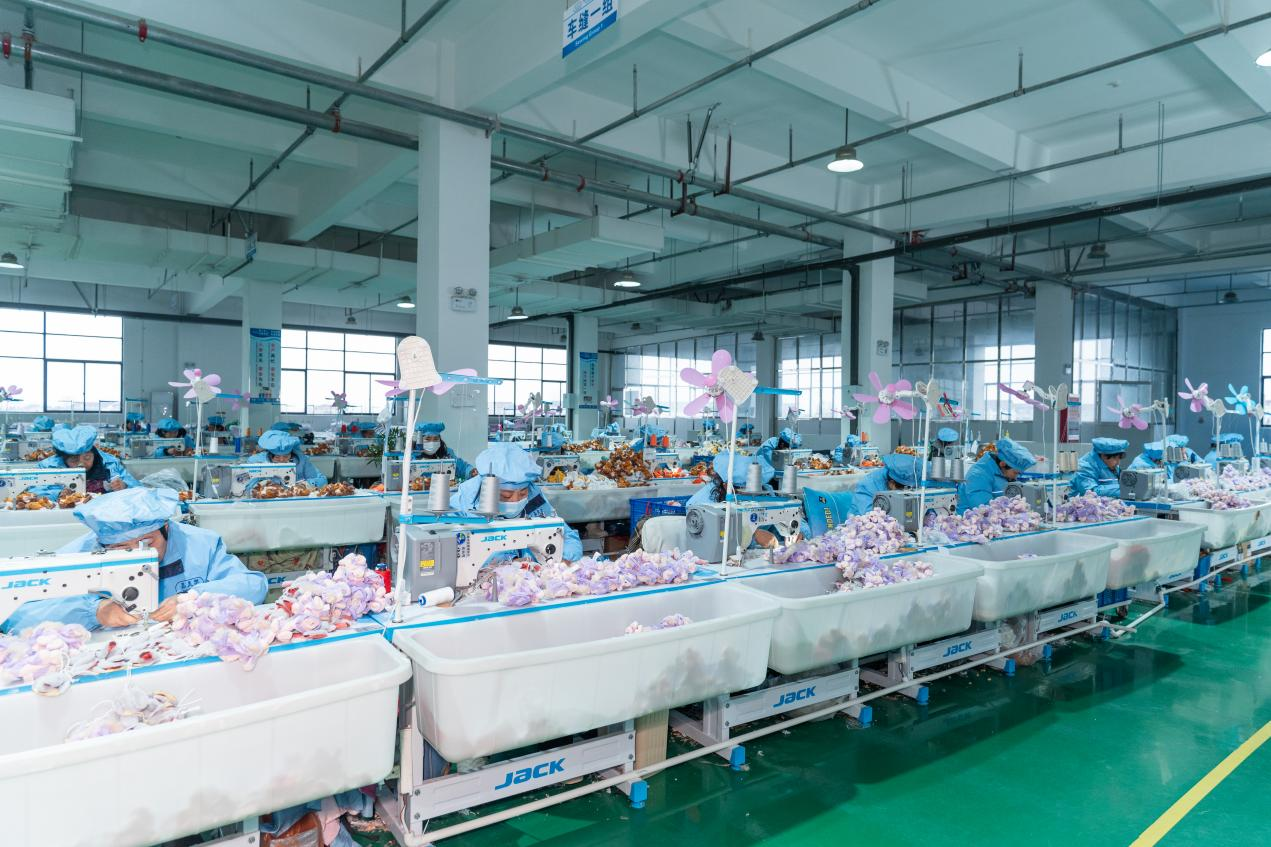
Jiameile (Tianchang Jiameile Gifts Co., Ltd) manufactures plush pet toys, squeaky toys and interactive items with full OEM/ODM support, and runs a full-process IQC/IPQC/OQC quality system with raw material safety control. Its products comply with EN71, ASTM F963 and GB6675, and the company holds certifications including ICTI, BSCI, Disney FAMA, ISO 9001 and ISO 14001. Products are exported to more than 27 countries and regions, with the EU and USA representing the main markets within a 70% export ratio. The company also manages supply chain and delivery risk through monthly capacity planning, backup suppliers, and inventory and lead time management.
FAQ: TPR, Short Plush and Oxford Fabric in Custom Plush Pet Toys
Which safety standards do custom plush pet toys need to meet for the EU and US markets?
For the EU, custom plush toys must bear the CE mark and pass EN71-1 for mechanical properties, EN71-2 for flammability, and EN71-3 for chemical migration. For the US, plush pet toys must comply with ASTM F963-23, which regulates flammability, heavy metals and mechanical safety including seam strength, in addition to CPSIA requirements. Chinese domestic programmes are specified against GB/T 43839-2024 together with GB6675. Claims such as non-toxic, lead-free and phthalate-free should always be tied to a specific test method rather than stated on their own.
Can a single custom plush pet toy combine TPR, short plush and Oxford fabric?
Yes, and combining them is often the better specification. Jiameile develops and manufactures plush pet toys, squeaky toys and interactive items with full OEM/ODM support, so a product can pair a short plush body with a food-grade TPR chew or teething element, and use Oxford fabric panels in the areas that take the most pulling. The material mix is decided by the chew level, size band and dog weight of the SKU, not by a single default fabric. The assembly point where TPR meets textile deserves the most design attention, because it concentrates stress.
Why does a reinforced plush toy cost more than a basic plush toy, and when is it worth it?
The reinforced construction uses double-layer fabric and reinforced stitching instead of a single basic fabric layer, which raises unit cost to a medium position compared with the lowest-cost basic tier. What the buyer gets back is a documented lifespan of 3–12 months instead of 1–3 months — a 2 to 4 times increase — plus lower breakage and low maintenance, which reduces replacement frequency and results in a lower total cost of ownership. The reinforced tier fits e-commerce platforms, pet specialty stores, retail chains and long-term pet companionship. The basic tier remains the right choice for low-end retail, promotional gifts and short-term use.
How should a buyer validate a material choice before mass production?
Validate three things on a sample. First, tie every performance claim to a test method — EN71-3 and CPSIA for chemical claims, ASTM F963-23 for flammability, heavy metals and seam strength. Second, inspect the seams, the squeaker opening and the TPR-to-textile joint, because those are the points where a plush pet toy normally fails first. Third, confirm that the supplier applies incoming and in-process material controls, since raw material safety control and an IQC/IPQC/OQC system are what keep a sample specification consistent in mass production.
What determines lead time on a custom plush pet toy order, and how do I start?
Lead time is driven mainly by production planning and supply chain management rather than by the fabric choice alone. The variables that move it are material availability, the compliance testing route for the destination market, and any tooling required for moulded TPR elements. These are managed through monthly capacity planning, backup suppliers, and inventory and lead time management, so the safest approach is to state the requirement precisely at the start. To begin, send Jiameile your chew level, size band, dog weight band, target quantity and destination market, and request material samples and a quotation at winnie@jml-toys.com or on WhatsApp at +86 173-7538-5845.
Conclusion
TPR, short plush and Oxford fabric are not three versions of the same answer. Food-grade TPR exists to give a dog a defined, soft, cleanable chewing surface. Short plush exists to make a toy soft, light and visually sellable. Oxford fabric exists to keep the structure of the toy intact under tearing and abrasion. Most successful custom plush pet toys use two of the three, matched to a defined chew level, size band and dog weight class, and built on a construction tier that determines the real lifespan.
That is the decision order this guide recommends: define the chew level, the size and the dog weight first; choose the construction tier second; choose the outer material third; and confirm the EU, US or China compliance route before tooling. It is a short sequence to run, and it prevents the most expensive mistake in the category — approving a compliant, well-finished toy that was specified for the wrong dog.
Build your next custom plush pet toy with Jiameile
Jiameile (Tianchang Jiameile Gifts Co., Ltd) is a plush and textile toy OEM/ODM manufacturer that produces custom plush pet toys, squeaky toys and interactive items for the EU and US markets, with food-grade TPR components, short plush and Oxford fabric constructions available under one roof.
Send your chew level, size band, dog weight class and destination market, and we will confirm the suitable construction, the compliance path, and a sample and quotation.
Email: winnie@jml-toys.com | WhatsApp: +86 173-7538-5845 | Blog: blog.jiameiletoys.com
Address: Shanghai, China
Have Questions or Need More Details?
Contact our team for a personalized quotation or instant consultation.
Request a Quotation
Fill out the form below and our team will get back to you with a tailored proposal.
WhatsApp Direct Chat
Prefer to chat in real-time? Message us on WhatsApp for instant assistance & quick answers.
- Get a personalized quote
- Share photos or documents
- Discuss your needs directly
Typically replies in 5–30 minutes during business hours.