EN71, CPSIA and GB/T 43839-2024: A Compliance Map for Custom Plush Pet Toys
Short answer: a custom plush pet toy sold into the EU, the US, and China is judged against three different frameworks, and none of them substitutes for another. EN71 is the European toy-safety test series. CPSIA-aligned limits are the US chemical benchmark that brands write into a purchase order. GB/T 43839-2024, Safety Technical Requirements for Companion Animal (Pet) Products, is China's pet-specific standard. A supplier meets all three only when the material set — food-grade TPR, short plush, Oxford fabric — and the factory control system were designed for them from the sample stage.
This guide is written for importers, pet brand owners, private-label buyers, and sourcing managers who are past supplier discovery and are now building an evaluation file. It maps what each framework actually tests, which material supports which claim, how weight-specific options change the scope, and how IQC, IPQC, and OQC keep a certificate valid between the approved sample and the shipped carton.
Problem Definition: Why a Passed Certificate Rarely Means the Same Thing Twice
Compliance problems in plush pet toys are rarely caused by a supplier refusing to test. They are caused by a specification that names a standard without naming the scope, the substrate, or the production stage at which the evidence was generated. Three failure modes account for most of that friction.
1. Standard-to-market mismatch
A purchase order that names EN71 for a shipment going to a US retailer, or a CPSIA-style analyte list for a container staying in China, looks compliant and proves nothing about the market the product is sold in. The frameworks differ in scope, in what they measure, and in the document they produce at the end.
2. Material claims with no declaration behind them
Non-toxic, lead-free, and phthalate-free are conclusions, not specifications. Each becomes verifiable only when it is tied to a named material such as food-grade TPR, a named test scope, and a report that lists which substrates were submitted — fabric face, print area, thread, or polymer component.
3. Certification drift between sample and mass production
A passed sample certifies the sample. When the fabric mill changes, when the TPR granulate batch changes, or when the printing ink changes, the earlier report no longer describes what is inside the shipping carton. Continuity depends on incoming inspection and change control, not on the report alone.
Industry Background: Pet-Toy Compliance Is Contractual, Not Statutory
The category is large enough that retailers apply pressure on documentation. The global pet toys market reached a valuation of USD 9.60 billion in 2025, according to Fortune Business Insights, and plush and soft toys are estimated at roughly 30% of the dog toy market, according to Custom Market Insights. In the US, the Pet Supplies, OTC Meds and Live segment reached USD 34.4 billion in 2024, according to the American Pet Products Association.
The regulatory position is looser than most first-time buyers expect. Pet toys fall outside mandatory CPSC jurisdiction in the United States, and ASTM F963 is voluntarily applied rather than enforced for the pet category. In practice that does not lower the bar; it relocates the bar into the contract. When there is no statutory gate, the retail buyer, the brand owner, or the marketplace becomes the gate, and the purchase order becomes the specification.
That is the reason this guide treats EN71, CPSIA, and GB/T 43839-2024 as a mapping exercise rather than a checklist. Each framework answers a different question, and a three-market product needs the answers kept in one file rather than three separate folders held by three different departments.
Detailed Solution: Mapping the Three Frameworks to Plush Materials
EN71: the four parts buyers usually name
EN71 is normally quoted as a set of parts, and the part number carries the meaning. A purchase order that says only EN71 leaves the supplier to guess which of the four commonly cited parts is required.
- Part 1 — mechanical and physical properties. On a plush toy this is where seam strength, attachment of eyes and noses, squeaker containment, and small-part detachment are decided, particularly on teething formats where the seam is the first point of failure.
- Part 2 — flammability. Relevant to plush fibre and to surface flash behaviour of the finished soft body.
- Part 3 — migration of certain elements. Applies to dyed fabric, printed labels and hang tags, and TPR components that the animal mouths.
- Part 9 — organic chemical compounds. Extends the chemical scope beyond elemental migration.
Brand-level claim sets often bundle these parts with other schemes. The Chewy product page for P.L.A.Y. Pet Lifestyle and You, for example, states EN71 Part 1, 2, 3 and 9, ASTM F963, REACH SVHC, and Oeko-Tex. That is a product-specific claim and should not be generalised to the category — but it shows the shape of a modern pet-toy compliance file, where a toy-safety test series is quoted alongside chemical and textile schemes rather than instead of them.
CPSIA-aligned limits: a US benchmark written into the purchase order
CPSIA is the US federal framework for children's products, covering lead and phthalate limits together with the test documentation that supports them. Because pet toys fall outside mandatory CPSC jurisdiction, CPSIA-aligned limits normally reach a plush pet toy through a brand specification rather than through category enforcement. Three practical consequences follow:
- The binding document is the purchase order and the test request, not the statute.
- The analyte list, the substrate list — fabric face, thread, print, TPR — and the limit values must all be written down rather than implied.
- Where a retailer also asks for ASTM F963, the two scopes are quoted together and tested as one programme rather than as two separate reports.
For a buyer, this is the single most useful insight in the whole mapping: in the pet category, the standard is only as strong as the document that references it.
GB/T 43839-2024: China's pet-product standard
GB/T 43839-2024, Safety Technical Requirements for Companion Animal (Pet) Products, is a Chinese national standard written for pet products specifically rather than borrowed from children's toys. The GB/T prefix denotes a recommended national standard rather than a mandatory one. It has two uses for a sourcing team: it is the domestic compliance baseline for product sold inside China, and it is a useful third reference point when a supplier claims international compliance without naming which markets the claim covers.
In Jiameile's product specifications, the small, medium, and large plush toy lines state compliance with GB/T 43839-2024 alongside EN71 and CPSIA. Quoting all three in the specification sheet is the practical way to stop a supplier from answering only the easiest one.
How food-grade TPR, short plush, and Oxford fabric support the claims
Materials are where a compliance map turns into a purchasing decision. Each material in the plush pet toy set carries a different risk profile and therefore a different evidence requirement.
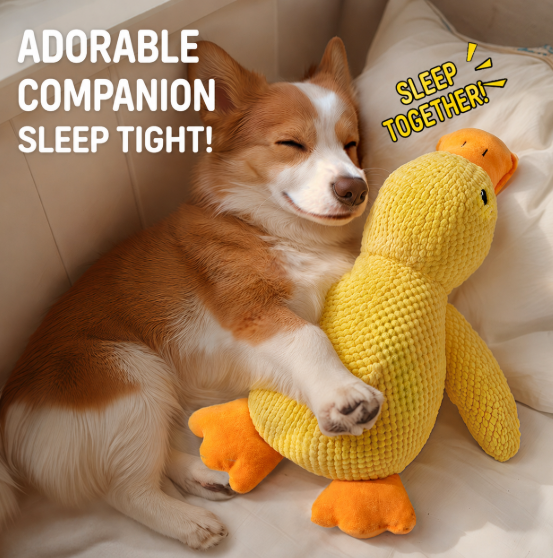
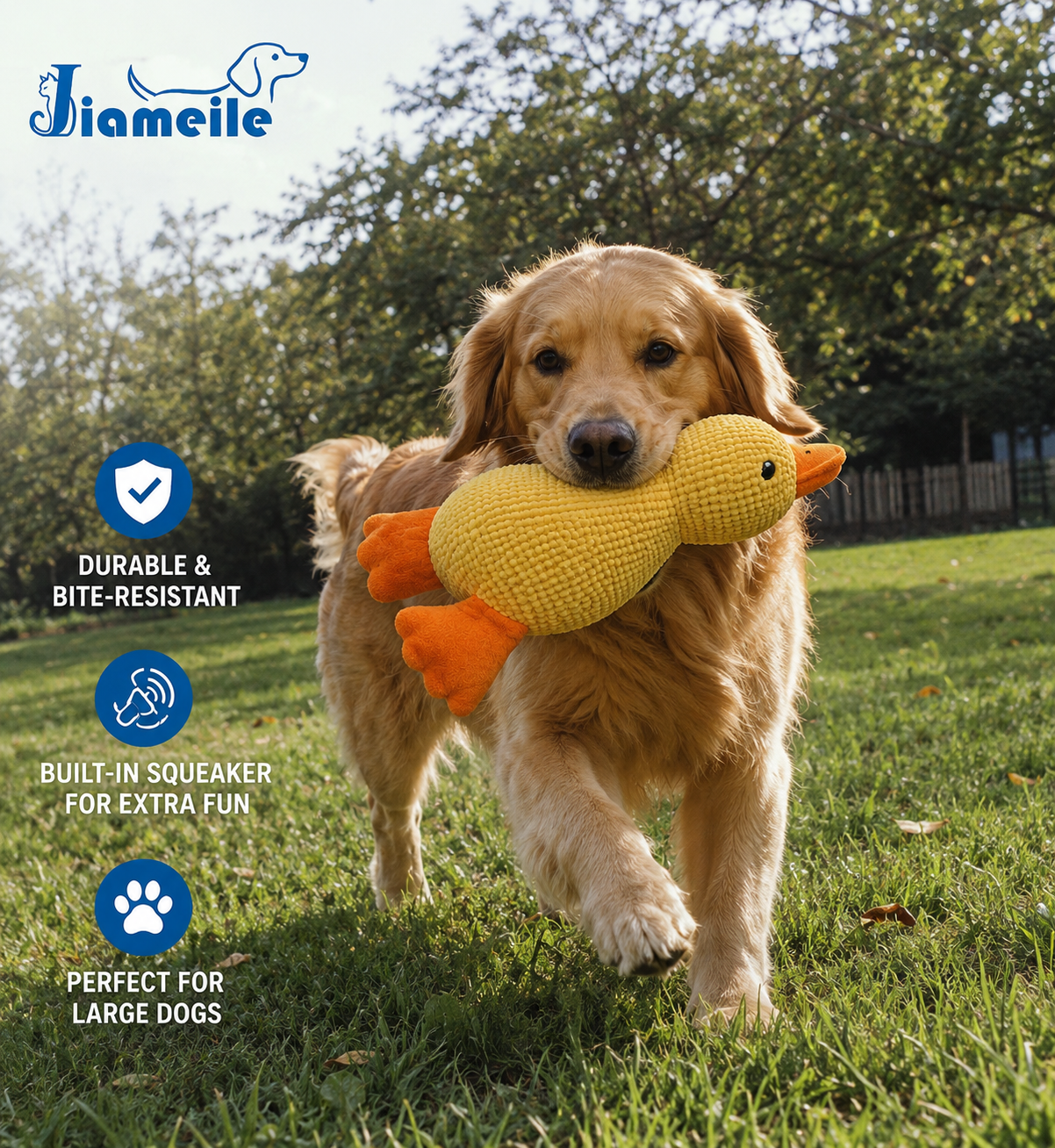
Food-grade TPR. Thermoplastic rubber is the component most exposed to chemical scrutiny because it is chewed rather than only carried. A food-grade grade paired with a lead-free and phthalate-free declaration is the version of the claim a laboratory can act on: the declaration names the polymer, the additive package, and the substrates submitted. Jiameile specifies food-grade TPR, stated as lead-free and phthalate-free, for the 30–50 cm large-dog line intended for light, moderate, and aggressive chewers.
Short plush. Plush is a textile risk rather than a polymer risk. The exposure points are dye migration under EN71 Part 3, surface flammability under Part 2, and seam integrity under pull loading in Part 1. Short plush is the material used on the 10–15 cm and 15–20 cm small-size toys, which is also the size band where puppy teething and light-chewer programmes sit.
Oxford fabric. Woven Oxford raises tear resistance and accepts print and coating well, which shifts the compliance question away from the yarn and toward the print chemistry and the coating. It is the material specified for the 20–30 cm medium-size line.
| Material | Size and weight band | Claim it supports | Evidence a buyer should request |
|---|---|---|---|
| Food-grade TPR | 30–50 cm large toys; chew classes for light, moderate, and aggressive chewers | Lead-free, phthalate-free, non-toxic | Material declaration naming polymer and additives, plus migration testing on the TPR substrate and a phthalate scope |
| Short plush | 10–15 cm and 15–20 cm small toys | Non-toxic, dye-safe, washable | Fibre composition, dye and print list, EN71 Part 3 migration record, flammability record |
| Oxford fabric | 20–30 cm medium toys | Tear resistant, washable, print-safe | Print and coating chemistry declaration, plus migration testing on the printed area rather than the unprinted face |
IQC, IPQC, OQC, and audits: keeping the certificate true in production
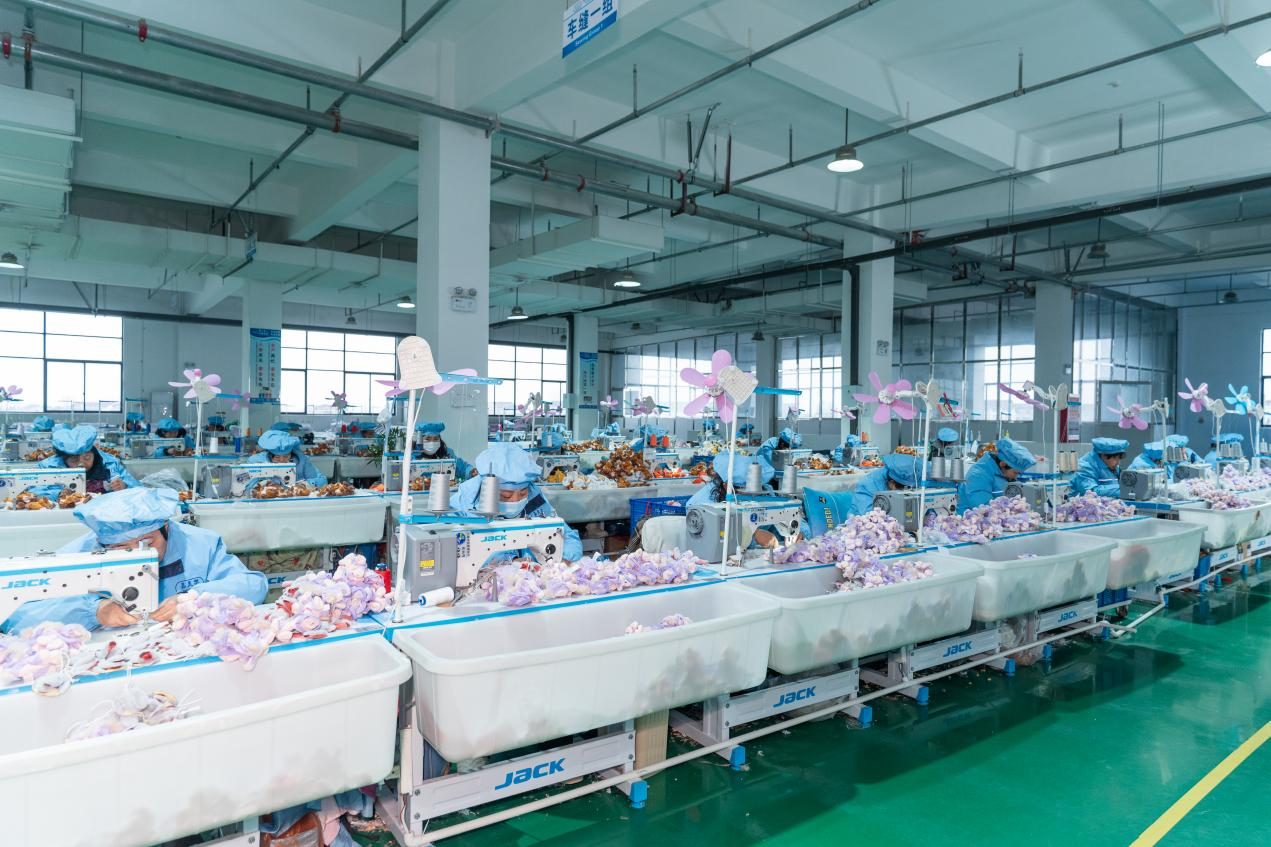
Tianchang Jiameile Gifts Co., Ltd, trading as Jiameile, is a China-based manufacturer of plush and textile toys established in 2004, operating a 6,800 m² facility with approximately 230 employees, an annual output of 6 million units, and a 70% export ratio concentrated on the EU and the USA. Its pet line covers plush pet toys, squeaky toys, and interactive items, and its compliance file is a useful example of how inspection gates and a test report fit together.
Inspection is the mechanism that converts a report into a repeatable shipment. A standard three-gate structure for plush pet toys looks like this:
- IQC, incoming inspection. Fabric rolls, TPR granulate, squeaker units, thread, and print are checked against the approved specification before release to the line. A substituted fabric is caught here or not at all.
- IPQC, in-process inspection. Stitch density, seam closure, stuffing, squeaker placement, and attached components are checked during production rather than after it.
- OQC, final inspection. Pull tests, functional squeaker checks, appearance, labelling, and packing are verified on finished goods, with third-party inspection by SGS or BV often required by the buyer.
Above the three gates sits the management-system layer. Jiameile holds ICTI, BSCI, Disney FAMA, ISO 9001, and ISO 14001 certifications. A distinction buyers should keep straight: ICTI, BSCI, and Disney FAMA are social-compliance and supply-chain audit programmes, while ISO 9001 and ISO 14001 are quality and environmental management systems. None of them is a product-safety certificate, and none replaces a test report on the material. Their value is that they force documented procedures and change control, which is what stops a product certificate from going stale.
Step-by-Step Breakdown: Building a Three-Market Compliance File
- Fix the destination markets first. EU, US, China domestic, or a combination. The market set decides the framework set before a sample is opened.
- Translate the market set into a standard list. EU: EN71 parts quoted by number. US: a CPSIA-aligned analyte list, plus ASTM F963 where the retailer asks. China: GB/T 43839-2024. Write that list into the RFQ instead of allowing the supplier to choose it.
- Declare the material set. Name the fabric (short plush, Oxford), the polymer (food-grade TPR), the print and coating, and the module (squeaker, heartbeat unit). A vague material name cannot be tested.
- Set the claim language before testing. Decide the exact phrases that will appear on packaging and product pages, then confirm each phrase has a test or a declaration behind it. Lead-free needs a substrate and a limit; washable needs a documented care process.
- Test the sample at the intended scope. Sample lead time at Jiameile runs 7–15 days, and the sample stage is the cheapest point at which a material question can still be resolved.
- Write the control plan. Specify IQC checkpoints, IPQC frequency, OQC acceptance criteria, and whether third-party inspection is required per shipment.
- Collect the audit pack. Management-system certificates, factory audit reports, and material declarations should be current and should name the site that will produce the order.
- Freeze change control. Any substitution in fabric, TPR batch, print, or module should trigger a documented re-test decision before production, not a claim after delivery.
Bulk production then runs 20–45 days depending on complexity and volume. Typical MOQ sits at 500–3,000 pieces per style, with complex custom designs often at 3,000–5,000 pieces, which means the compliance file is usually built once and then maintained across repeat orders rather than rebuilt every season.
Use Cases: Matching Compliance Scope to Weight Band and Product Type
Small-size and teething programmes (dogs under 5 kg)
The 10–15 cm and 15–20 cm short plush formats are built for light chewers and puppy teething, where the toy is mouthed more than carried. In compliance terms this is the band where EN71 Part 1 seam and attachment testing matters most, where dye migration from the plush face is the relevant chemical exposure, and where a washable care claim is tested in real households. Small size does not mean small scope: the substrate count per SKU is identical to a large toy.
Medium-weight programmes (5–15 kg)
The 20–30 cm Oxford fabric line trades softness for tear resistance. Buyers here should move the migration test scope onto the printed area, because print chemistry rather than base fabric becomes the dominant risk after the switch from plush to woven Oxford.
Large and heavy-duty programmes (15–30 kg, aggressive chewers)
On the 30–50 cm food-grade TPR line, reinforced stitching and chew resistance carry the mechanical load, and the polymer carries the chemical load. Service life expectations should be stated in the specification rather than assumed: standard plush toys run 3–12 months, reinforced chew toys 6–24 months, and TPR toys 12–36 months depending on usage intensity.
Squeaky and interactive builds
Squeaky custom plush pet toys and interactive variants require supporting equipment such as a squeaker device and a heartbeat module. Enclosed components add two compliance questions: containment under mechanical testing, and removability for cleaning. A module that cannot be removed limits the washable claim that the fabric would otherwise support.
Washable programmes and the module caveat
Washability is a care claim with compliance consequences. Published care guidance for plush dog toys converges on a gentle cold cycle followed by air drying, with electronic parts removed first and heat avoided because it damages squeakers and stitching. Retail guidance from Jeffers Pet points the same way: machine-washable plush toys should be washed on a gentle or delicate cycle and air dried thoroughly. Write that instruction into the packaging copy, and design the module as removable if the washable claim is part of the positioning.
Cat toys and dog toys inside one programme
Cat-focused plush is usually built in smaller formats with lighter construction. The substrate list in the test request is broadly similar, but the mechanical requirements and the intended user differ, so a dog-toy report should not be reused as evidence for a cat-toy SKU without checking the scope.
Regional buying teams working from one specification
EU-facing teams lead with EN71 part numbers. US-facing teams lead with a CPSIA-aligned analyte list and the retailer specification. China-domestic teams lead with GB/T 43839-2024. A single SKU sold into all three markets needs the three requirements written into one document, or the factory will optimise for whichever arrives first.
Comparison Table: EN71 vs CPSIA-Aligned Testing vs GB/T 43839-2024
| Dimension | EN71 | CPSIA-aligned testing (US) | GB/T 43839-2024 |
|---|---|---|---|
| Region | European Union | United States | China |
| What it is | European toy-safety standard series, quoted by part | US federal framework for children's products, covering lead and phthalate limits with test documentation | Chinese national standard for companion animal (pet) products |
| Status for pet toys | Applied as a buyer or retailer requirement | Pet toys fall outside mandatory CPSC jurisdiction, so limits are applied through the purchase order | Recommended national standard (GB/T), written specifically for pet products |
| Typical scope | Part 1 mechanical and physical, Part 2 flammability, Part 3 element migration, Part 9 organic compounds | Lead, phthalates, and the supporting test documentation | Safety technical requirements for companion animal products, as stated in the supplier specification |
| Material focus | Dyed plush, print, TPR, attached components | TPR and plastic components, print, all submitted substrates | Full product and material set |
| Evidence produced | Test report, by part number | Test report, by analyte and substrate list | Declaration of conformity in the product specification |
| Buyer action | Name the parts in the purchase order | Name the analytes, substrates, and limit values | Confirm the standard is quoted in the specification sheet |
FAQ: Compliance, Capability, Budget, Sample, and Lead Time
Do custom plush pet toys need EN71, CPSIA, or GB/T 43839-2024 — or all three?
It depends on the destination market and on what the buyer specifies. EN71 is the European toy-safety test series and reaches pet toys as a buyer requirement. CPSIA-aligned testing reaches US-bound pet toys through the purchase order, because pet toys fall outside mandatory CPSC jurisdiction and ASTM F963 is applied voluntarily. GB/T 43839-2024 is China's pet-product standard and is the domestic baseline for sales inside China. A programme selling into all three markets needs all three in one compliance file, not one framework stretched to cover the other two.
Can one supplier test food-grade TPR, short plush, and Oxford fabric against all three frameworks?
Only if the materials are declared and controlled in production. Food-grade TPR, short plush, and Oxford fabric carry different risks — polymer additives, dye migration, print chemistry — so each needs its own substrate in the test request. A factory running IQC, IPQC, and OQC gates alongside management-system audits can keep those reports current across repeat orders. Jiameile holds ICTI, BSCI, Disney FAMA, ISO 9001, and ISO 14001 certifications and runs the three-gate inspection structure described above.
What drives the cost of a multi-standard compliance file?
Test scope rather than unit price. The main variables are the number of SKUs and colourways tested, the number of substrates per SKU, whether third-party inspection by SGS or BV is required per shipment, and whether squeaker or heartbeat modules fall inside scope. These are decisions taken at the specification stage, and settling them before the sample is approved is materially cheaper than re-testing after material sign-off.
How long does a compliance-ready sample take?
Sample lead time at Jiameile runs 7–15 days, with typical MOQ of 500–3,000 pieces per style and 3,000–5,000 pieces for complex custom designs. The sample window is where the material declaration and the test scope should be locked, because any change after approval reopens the file and resets the evidence.
How do compliance steps affect bulk lead time?
Bulk production runs 20–45 days depending on complexity and volume. Capacity is rarely the constraint — mid-size factories run 100,000–300,000 pieces per month and large factories 500,000–1,000,000 or more — the constraint is sequence: material declaration, sample test, control plan, then bulk. Buyers who test after bulk approval add a full production cycle to their timeline. To start a compliant sample with Jiameile, contact winnie@jml-toys.com or WhatsApp +86 173-7538-5845.
Conclusion: A Compliance File, Not a Badge
EN71, CPSIA-aligned limits, and GB/T 43839-2024 answer three different questions, and the reason buyers get surprised is that only one of them behaves like a legal gate. Pet toys sit outside mandatory CPSC jurisdiction in the US, so the contract does the work that a statute would otherwise do; EN71 arrives as part numbers in a purchase order; GB/T 43839-2024 anchors the Chinese domestic requirement. Mapping them once, in writing, is faster than reconciling three reports later.
The material set then decides whether the map holds. Food-grade TPR carries the polymer and additive risk, short plush carries the dye and flammability risk, Oxford fabric carries the print and coating risk — and each maps to a different substrate in the test request. What keeps all of it true after approval is the unglamorous layer: IQC catching a substituted roll, IPQC holding the seam, OQC confirming the finished unit, and a managed audit pack behind them.
For buyers currently in research and evaluation, the practical next step is a single document that lists destination markets, standard parts, materials, and evidence requirements, sent with the RFQ rather than after the sample. Jiameile builds those files against EN71, CPSIA, and GB/T 43839-2024 for small, medium, and large plush formats, including squeaky, teething, interactive, and washable builds — with samples available for evaluation before a production commitment.
Request a compliance-ready sample
Send your destination markets, weight band, and material preference, and Jiameile will return a sample plan with the test scope attached.
Email: winnie@jml-toys.com | WhatsApp: +86 173-7538-5845 | Tianchang Jiameile Gifts Co., Ltd, established 2004

Have Questions or Need More Details?
Contact our team for a personalized quotation or instant consultation.
Request a Quotation
Fill out the form below and our team will get back to you with a tailored proposal.
WhatsApp Direct Chat
Prefer to chat in real-time? Message us on WhatsApp for instant assistance & quick answers.
- Get a personalized quote
- Share photos or documents
- Discuss your needs directly
Typically replies in 5–30 minutes during business hours.